


Underwater Robotics Market Trends Revolutionizing Marine Inspection and Infrastructure Monitoring
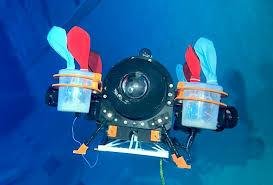
The underwater robotics domain is broadly divided into two primary structural categories: Remotely Operated Vehicles (ROVs) and Autonomous Underwater Vehicles (AUVs), each serving distinct operational niches within the maritime economy. ROVs remain physical extensions of surface operators, connected via heavy-duty umbilical tethers that deliver continuous electrical power and real-time control signals. This design makes ROVs unmatched for heavy-duty intervention work, such as subsea welding, valve turning, and heavy salvage operations requiring high hydraulic torque. In technical workshops evaluating marine robotics, engineers contrast ROV tether dependencies with the operational freedom of AUVs, which follow pre-programmed flight paths without physical surface links. An in-depth analysis of each Underwater Robotics Market Segment demonstrates how the commercial balance is shifting as hybrid platforms—capable of tethered heavy intervention and untethered autonomous mapping—gain operational traction across complex offshore environments.
Beyond ROVs and AUVs, specialized subsea crawlers represent a rapidly growing sub-category tailored for seafloor operations like seabed trenching, cable burial, and benthic ecological monitoring. Crawlers utilize tracked drive mechanisms to maintain direct physical contact with the ocean floor, offering superior stability when operating in heavy surf zones or strong current conditions. During operational strategy panels, fleet managers evaluate these categorical distinctions to select the ideal platform for specific commercial contracts. By deploying hybrid systems that combine the mobility of AUVs, the heavy lifting capacity of ROVs, and the bottom-stability of seabed crawlers, maritime operators can execute multifaceted subsea engineering campaigns with maximum capital efficiency and reduced operational timelines.
Frequently Asked Questions
What is the fundamental difference between an ROV and an AUV?
An ROV is physically connected to a surface vessel via a tether for power and human control during complex intervention tasks, whereas an AUV operates untethered following pre-programmed or adaptive autonomous algorithms.
When are subsea crawlers preferred over swimming underwater vehicles?
Subsea crawlers are preferred for seafloor tasks requiring physical traction and heavy load handling, such as trenching cables, pipe placement, and operating in turbulent shallow water or strong current conditions.
➤➤➤Explore MRFR’s Related Ongoing Coverage In Semiconductor Industry:
Ai In Video Surveillance Market
Autonomous Mobile Robot Market
 Greek
Greek
 English
 Arabic
 French
 Spanish
 Portuguese
 Deutsch
 Turkish
 Dutch
Dutch
 Italiano
 Russian
 Romaian
 Portuguese (Brazil)