


ReRAM Market Forecast: Advanced Memory Technologies Accelerate Semiconductor Industry Development
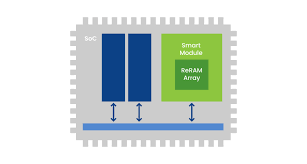
Modern hyper-scale data centers face ongoing challenges in balancing storage performance, energy consumption, and capital expenditure. The memory hierarchy has long maintained a distinct gap between volatile DRAM—offering high speed at high cost and power—and non-volatile NAND Flash—offering high density at slower operational speeds. Resistive Random-Access Memory addresses this structural divide by serving as a viable technology for Storage Class Memory (SCM) and persistent memory tiers. Industry analysis through dedicated ReRAM Market region perspectives reflects how regional cloud hubs are evaluating persistent memory modules to accelerate database indexing, real-time analytics, and transaction processing. By providing byte-addressability and low read latencies, ReRAM allows servers to recover instantaneously from system crashes without needing long reload sequences from secondary storage.
Deploying resistive memory as a persistent memory tier also offers significant power savings at the system level. Dynamic RAM requires continuous refresh cycles to maintain data integrity, accounting for a substantial portion of a server's idle power consumption. Replacing or supplementing DRAM with non-volatile resistive memory arrays eliminates refresh energy overhead, directly lowering Power Usage Effectiveness (PUE) metrics for data center operators. Furthermore, high write endurance ensures that heavy transaction workloads will not prematurely degrade the storage media. As enterprise software platforms evolve to natively support byte-addressable persistent memory, system architectures will increasingly integrate ReRAM modules directly onto the main memory bus, achieving high throughput and lowered total operational costs.
Frequently Asked Questions
-
What is byte-addressability and why does it matter for persistent memory? Byte-addressability allows the CPU to read or write individual bytes of data directly, just like DRAM, rather than forcing operations in large block sizes like NAND Flash. This drastically reduces software overhead for small data modifications.
-
How does ReRAM contribute to lower data center PUE (Power Usage Effectiveness)? Unlike DRAM, ReRAM requires zero power to retain stored data when idle. By replacing portions of DRAM with non-volatile ReRAM, data centers eliminate continuous memory refresh power, directly lowering overall server energy usage.
➤➤➤Explore MRFR’s Related Ongoing Coverage In Semiconductor Industry:
Musical Instrument Insurance Market
Next Generation 3D Display Market
Non Contact Infrared Thermometer Market
Non Volatile Dual In Line Memory Module Market
Powder Bed Fusion Process 3D Printer Market
Property Casualty Reinsurance Market
 Russian
 English
 Arabic
 French
 Spanish
 Portuguese
 Deutsch
 Turkish
 Dutch
Dutch
 Italiano
 Romaian
 Portuguese (Brazil)
 Greek
Greek