


24/7 Managed SOC Services: A Costly Security Gap for Indian Healthcare
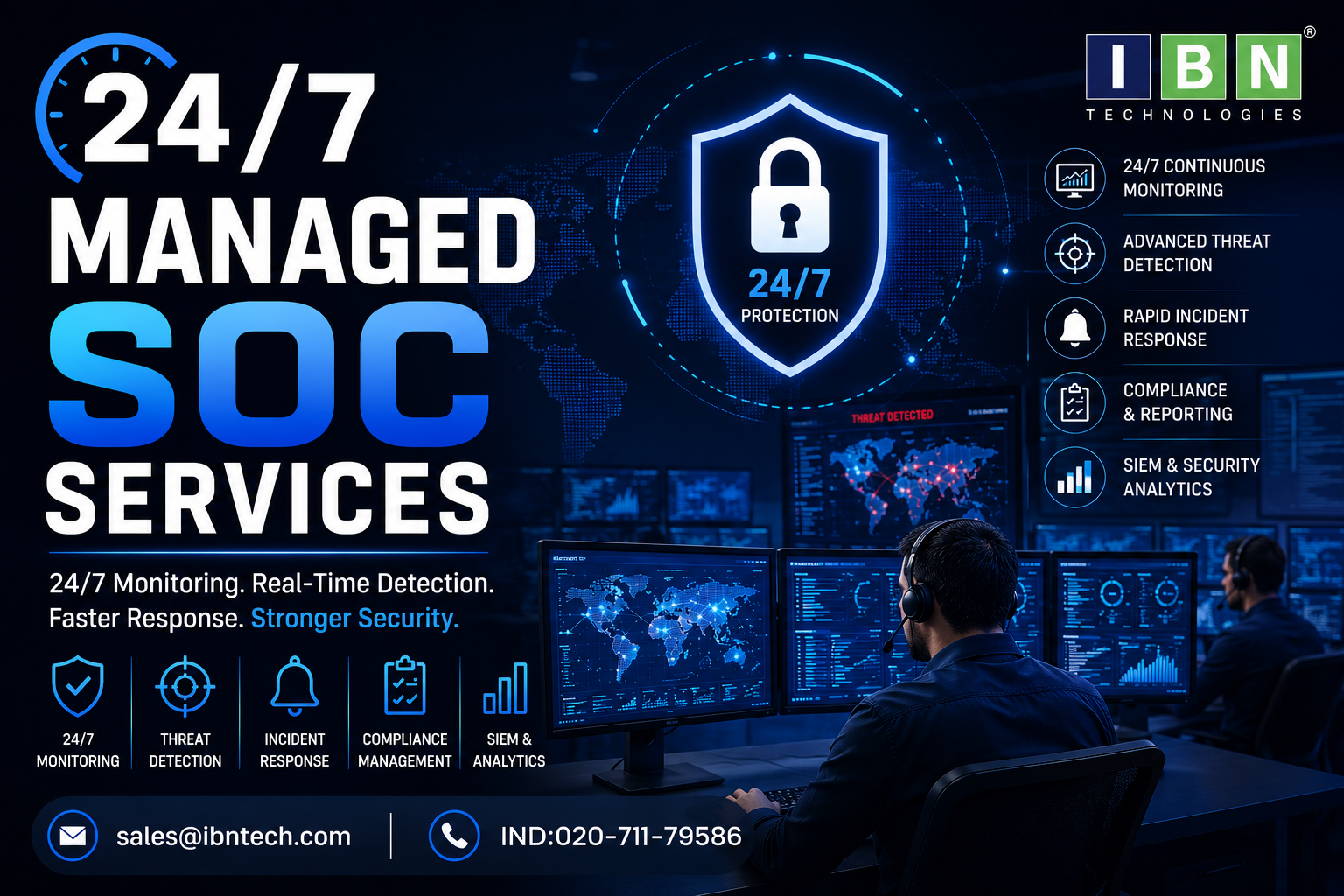
Where Healthcare Security Meets 24/7 Managed SOC Services in India
Healthcare organizations operate environments where technology supports far more than administrative work. Hospitals, diagnostic centers, healthcare networks, and digital health operations may rely on clinical applications, connected devices, cloud platforms, endpoints, identity systems, and patient-facing services.
That interconnected environment creates a security challenge: suspicious activity can occur outside normal working hours, while internal teams may not have the capacity to investigate every alert continuously. This is where 24/7 managed SOC services can provide continuous security monitoring and a structured approach to detecting and responding to threats.
For Indian healthcare organizations, the objective is not simply to monitor more alerts. It is to improve visibility across critical systems while helping security teams identify meaningful events and coordinate an appropriate response.
What 24/7 Managed SOC Services Mean for Healthcare
24/7 managed SOC services provide continuous security monitoring through a managed security operations model. Security events from relevant systems are collected, analyzed, correlated, and investigated so that potentially harmful activity can be identified and escalated.
For healthcare organizations, this approach matters because security incidents can affect both information systems and the availability of technology that supports daily operations.
A managed SOC can help security teams maintain visibility when internal resources are limited, while providing processes for alert investigation, incident escalation, reporting, and ongoing monitoring.
Why Healthcare Environments Need Continuous Security Visibility
Healthcare technology environments are increasingly interconnected. A single organization may have user endpoints, servers, applications, network infrastructure, cloud resources, identity platforms, and other technology supporting different operational functions.
This creates several areas that require attention.
An unusual login may indicate compromised credentials. A sudden change in system activity could require investigation. An endpoint generating repeated security alerts may represent a broader issue rather than an isolated event.
The challenge becomes greater when security monitoring depends primarily on employees manually reviewing alerts during business hours.
24/7 Managed SOC Services and the Healthcare Monitoring Challenge
Healthcare security monitoring needs to account for more than the presence of security alerts. The context surrounding those alerts is important.
A useful monitoring model considers factors such as the affected system, user activity, event frequency, severity, and relationship between multiple security events. Correlating this information can help distinguish routine activity from patterns that require investigation.
This is where SIEM capabilities can support the SOC function by bringing security information together for analysis and investigation.
How SOC Services in India Can Support Healthcare Operations
The healthcare sector has different operational priorities from many other industries, which means security monitoring needs to align with business continuity.
When evaluating soc services in india, healthcare organizations should look beyond whether a provider offers round-the-clock monitoring. They should understand what is monitored, how alerts are investigated, how incidents are escalated, and what reporting is provided.
The service should fit the organization's existing technology environment and security processes rather than operate as an isolated monitoring layer.
Key areas can include security event monitoring, suspicious activity detection, alert triage, incident escalation, log analysis, security reporting, and continuous visibility across agreed systems.
Monitoring Priorities Across a Healthcare Environment
Not every system generates the same security risk or requires the same monitoring approach. A healthcare organization can prioritize monitoring according to operational importance.
|
Healthcare Security Area |
Monitoring Focus |
Why It Matters |
|
User identities |
Unusual logins, privilege changes, authentication activity |
Helps identify potential credential misuse |
|
Endpoints |
Malware indicators, abnormal activity, repeated alerts |
Supports early investigation of compromised devices |
|
Servers |
Suspicious processes, access patterns, system events |
Helps protect critical infrastructure |
|
Applications |
Unusual access and security events |
Provides visibility into application-level activity |
|
Network infrastructure |
Traffic anomalies and security events |
Helps identify potentially suspicious communication |
|
Cloud environments |
Identity, access, and configuration-related events |
Extends monitoring beyond traditional infrastructure |
This type of prioritization helps organizations build a monitoring strategy around operational importance instead of treating every alert equally.
Why Traditional Security Monitoring Can Fall Short
A healthcare organization may already have security tools in place without having continuous operational visibility.
Security products can generate alerts, but alerts still need to be reviewed, investigated, prioritized, and escalated. If monitoring depends entirely on a small internal team, high alert volumes can make it difficult to maintain consistent attention.
Another challenge is fragmented visibility. Different security technologies may produce separate event streams, making it harder to understand whether several seemingly unrelated alerts are part of the same activity.
A managed SOC model can address this operational challenge by combining monitoring processes with security analysis and defined escalation procedures.
What a Healthcare SOC Operating Model Should Include
A practical managed SOC arrangement should clearly define responsibilities between the healthcare organization and the service provider.
The first component is continuous monitoring. Relevant security events need to be observed throughout the agreed coverage period.
The second is alert analysis. Not every event represents a confirmed security incident, so alerts require appropriate investigation and prioritization.
The third is incident escalation. When activity requires action from the healthcare organization's internal team, escalation procedures should be clear.
The fourth is reporting and visibility. Healthcare security leaders need information that helps them understand what is being detected, what has been investigated, and where recurring security issues exist.
Finally, the monitoring model should be reviewed regularly so that changes to infrastructure, applications, users, and security requirements are reflected in the operating process.
Internal Team or Managed SOC?
Healthcare organizations do not necessarily need to choose between internal security personnel and external monitoring. A managed SOC can complement an existing security team by extending monitoring coverage and providing additional operational support.
|
Consideration |
Internal Monitoring |
Managed SOC Model |
|
Monitoring coverage |
Depends on internal staffing and processes |
Designed for continuous coverage |
|
Alert handling |
Managed by internal personnel |
Managed through defined SOC processes |
|
Security visibility |
Depends on deployed tools and internal review |
Centralized monitoring can improve visibility |
|
Incident escalation |
Internal workflow |
Defined escalation between provider and organization |
|
Reporting |
Built around internal processes |
Structured SOC reporting can support governance |
|
Scalability |
Requires additional internal resources as needs grow |
Can provide an adaptable operating model |
The right model depends on the organization's infrastructure, internal expertise, security objectives, and operational requirements.
Common Mistakes Healthcare Organizations Should Avoid
One common mistake is focusing only on the number of alerts detected. More alerts do not automatically mean better security.
Another is connecting systems to monitoring without defining what should happen after an important alert appears. Detection without a response process can leave security teams uncertain about the next action.
Organizations should also avoid treating SOC monitoring as a one-time implementation. Healthcare environments change continuously, so monitoring priorities need regular review.
Finally, reporting should not become a collection of technical numbers with little operational context. Security leaders need meaningful information about recurring alerts, incidents, response activity, and areas requiring attention.
Security, Data Protection, and Compliance Context
Healthcare organizations in India need to consider applicable data protection, cybersecurity, contractual, and regulatory requirements when designing security operations.
The Digital Personal Data Protection framework is relevant where organizations process digital personal data within its scope. Security monitoring can support broader governance by providing visibility into security events and helping organizations maintain documented security processes.
A SOC should therefore operate as part of a wider security governance structure rather than as a standalone technology service.
Building a More Resilient Healthcare Security Operation
A strong healthcare security program combines technology, people, processes, and continuous visibility.
Organizations should identify critical systems, determine which events require monitoring, establish clear escalation paths, review recurring security patterns, and regularly assess whether monitoring coverage still matches the technology environment.
For organizations with limited internal security resources, 24/7 managed SOC services can provide a structured way to extend security monitoring beyond normal working hours while supporting threat detection, incident investigation, reporting, and operational continuity.
The goal is not simply to have someone watching security alerts around the clock. It is to create a repeatable security operation that helps healthcare organizations understand what is happening across their environment and respond appropriately when suspicious activity emerges.
Contact Us:
IND- 02067680404
IBN Technologies Ltd.
E-mail: - sales@ibntech.com
 Italiano
 English
 Arabic
 French
 Spanish
 Portuguese
 Deutsch
 Turkish
 Dutch
Dutch
 Russian
 Romaian
 Portuguese (Brazil)
 Greek
Greek