


SOC Audit: A Costly Healthcare Security Gap Indian Businesses Cannot Ignore
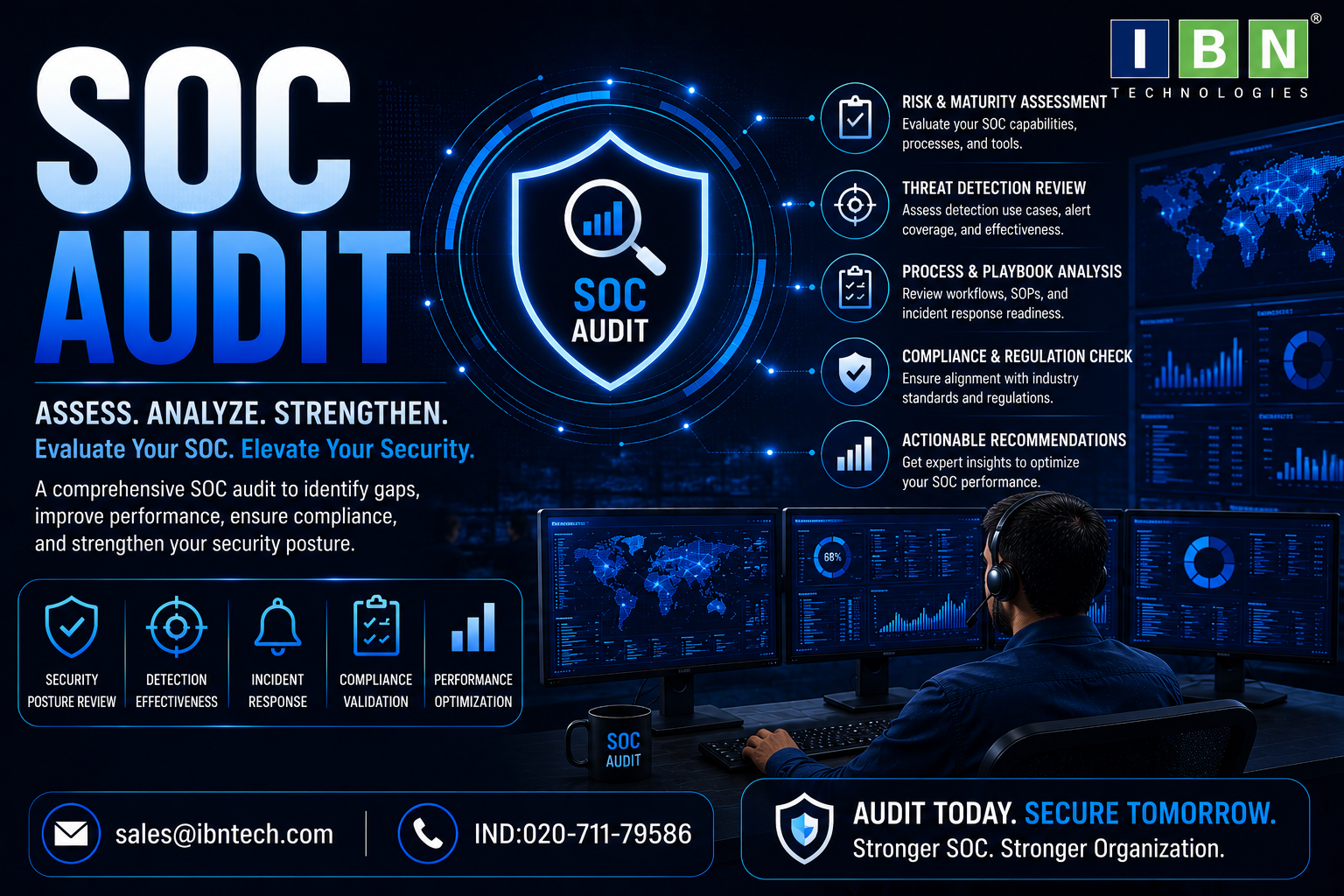
From Security Evidence to Action: Preparing Healthcare Teams for a SOC Audit
Healthcare organisations depend on technology for patient-facing services, internal operations, clinical workflows, communication, and information management. As these environments become more connected, security teams need visibility into what is happening across relevant systems and applications.
A soc audit provides an opportunity to examine whether security controls and operational processes work as intended. It can reveal gaps between written procedures and actual practices, particularly around monitoring, access management, incident response, logging, and evidence.
For healthcare organisations in India, preparation should not begin when an audit date is approaching. A more useful approach is to build audit readiness into everyday security operations.
What is a SOC audit and why does healthcare need one?
A SOC audit is a structured review of security operations, controls, monitoring practices, incident handling, and supporting evidence. It helps a healthcare organisation determine whether its security processes are implemented consistently and whether the organisation can demonstrate how those controls operate.
Healthcare environments can contain systems with different operational priorities and security requirements. Some systems may support patient services, while others support administration, communication, infrastructure, or business operations.
That variety makes security visibility important.
An audit can help teams understand whether security responsibilities are clearly assigned and whether operational controls remain aligned with the organisation's current technology environment.
How can a soc service provider support healthcare audit preparation?
A soc service provider can support security operations such as monitoring, alert analysis, incident escalation, and reporting when those activities are included in the agreed service scope.
For a healthcare organisation, the important consideration is how external SOC activities fit into its existing security processes.
The organisation should clearly define which activities remain internal and which are supported externally. It should also establish escalation procedures for security events that require internal investigation or decision-making.
External monitoring can contribute to audit readiness, but it does not replace the organisation's responsibility for governance, access controls, policies, risk management, and applicable compliance obligations.
Why do healthcare security teams struggle with audit preparation?
One challenge is that security information may be distributed across multiple systems.
Monitoring records, access reviews, incident documentation, change records, policies, and security reports may be maintained by different teams.
Another challenge is operational change.
Healthcare organisations can introduce new applications, modify infrastructure, onboard employees, change access requirements, or integrate new technology. Security documentation may not always be updated at the same pace.
There can also be uncertainty around ownership.
If an alert is detected by an external monitoring team but the internal team is responsible for investigation, both parties need a clear understanding of the handoff process.
A SOC audit can expose these gaps before they become larger operational problems.
Which healthcare security controls should teams review first?
Preparation should focus on controls that are relevant to the organisation's systems, risks, and audit scope.
Access management
Review who has access to systems and information, why access is required, and how access changes when responsibilities change.
Access should be aligned with defined roles and organisational requirements.
Security monitoring
Identify which systems generate security-relevant events and determine whether those events are monitored appropriately.
The objective is not simply to collect logs. Teams should understand how relevant events are reviewed and escalated.
Incident response
Check whether incident-response responsibilities are clearly defined.
Healthcare security teams should know who investigates an incident, who communicates internally, who makes operational decisions, and how evidence is documented.
Change management
Technology changes can affect security controls. Review whether important changes are authorised, documented, and assessed according to established procedures.
Security evidence
Determine whether operational evidence is accessible, relevant, current, and connected to the controls it is intended to demonstrate.
What does audit evidence look like in practice?
Evidence should demonstrate that a control operates rather than merely prove that a policy exists.
Consider access removal as an example.
A healthcare organisation may have a documented procedure requiring access to be removed when an employee leaves. During a review, the organisation may need to demonstrate that the procedure was followed through appropriate records.
The same principle applies to incident handling.
If the organisation states that security alerts are investigated according to a defined process, evidence should help demonstrate how investigations are performed and documented.
Good evidence therefore connects policy, activity, responsibility, and outcome.
How can healthcare teams prepare without creating unnecessary work?
Audit preparation becomes more manageable when evidence is maintained as part of normal operations.
Rather than collecting large volumes of information immediately before an audit, teams can establish consistent processes for maintaining relevant records throughout the year.
A practical preparation checklist includes:
- Identify systems and applications within the audit scope
- Map important security controls to responsible teams
- Review current access-management processes
- Confirm relevant security logs are available
- Examine incident-response documentation
- Verify escalation responsibilities
- Review security monitoring coverage
- Check whether important technology changes are documented
- Organise evidence by control or requirement
- Record unresolved findings and planned corrective actions
The objective is not to create additional documentation for its own sake. The objective is to make existing security operations easier to demonstrate and review.
Why is continuous monitoring important for healthcare security?
Continuous monitoring provides an ongoing view of security activity instead of relying exclusively on periodic reviews.
Security events can occur outside normal business hours, and healthcare technology environments may operate continuously. Monitoring can help security teams identify potentially significant events and begin appropriate investigation or escalation according to established procedures.
Continuous monitoring also creates operational records that may contribute to security reviews.
However, monitoring alone does not guarantee security effectiveness. The organisation still needs appropriate processes for alert triage, investigation, response, documentation, and improvement.
A useful way to think about it is simple: seeing an event is the beginning of the process, not the end.
What should healthcare organisations ask a SOC service provider?
When external SOC support is involved, healthcare teams should understand the exact service scope.
What systems can be monitored?
The organisation should establish whether the service can monitor the relevant technology environment and security event sources.
How are alerts investigated?
Teams should understand how alerts are prioritised, reviewed, documented, and escalated.
How are incidents communicated?
The organisation should know who receives notifications and what information is provided when a potentially significant security event is identified.
What reporting is available?
Reports should provide useful information about security operations and relevant findings rather than simply present raw activity.
How are responsibilities divided?
Clear responsibility between the healthcare organisation and service provider helps prevent operational gaps.
Which compliance considerations matter in healthcare?
Compliance requirements depend on the organisation, its activities, the information it processes, contractual obligations, and applicable Indian laws and requirements.
Where an organisation processes digital personal data within the scope of the Digital Personal Data Protection Act, 2023, relevant obligations should be considered alongside security controls and governance.
ISO/IEC 27001 may also be relevant for organisations establishing an information security management system.
Healthcare organisations should determine the specific requirements applicable to their operations instead of assuming that one certification or framework addresses every obligation.
A SOC audit can help connect applicable requirements with actual security controls, operational processes, and evidence.
How should teams handle findings after the audit?
The purpose of identifying a gap is to enable improvement.
A finding may reveal an outdated procedure, unclear responsibility, incomplete monitoring, inconsistent evidence, or an access-management weakness.
Each issue should be assessed according to its nature and significance.
Teams can then establish an appropriate remediation approach, assign ownership, and track progress.
It is also useful to look for patterns.
If several findings relate to missing evidence, the underlying issue may involve documentation processes rather than individual employees. If multiple findings involve delayed access changes, the organisation may need to review the workflow connecting business functions and IT operations.
This broader view can make audit activity more useful for security improvement.
Can audit readiness become part of everyday security operations?
Yes. Audit readiness does not need to be treated as a separate activity performed only before an assessment.
When organisations maintain current policies, monitor relevant systems, document incidents, review access, track changes, and preserve appropriate evidence as part of routine operations, audit preparation becomes less disruptive.
This approach also supports stronger security governance.
For healthcare organisations operating increasingly digital environments in India, the ability to demonstrate how security controls function can be valuable beyond the audit itself.
It can help management understand whether security processes remain aligned with operational realities.
Frequently Asked Questions
What is the purpose of a SOC audit in healthcare?
A SOC audit reviews security operations, controls, monitoring, incident processes, and supporting evidence. It helps healthcare organisations determine whether their security practices operate consistently and can be demonstrated through appropriate records.
How should healthcare organisations prepare for a SOC audit?
Preparation can include reviewing access management, monitoring, incident response, change management, security documentation, responsibilities, and available evidence. Organisations should align preparation with their specific audit scope and applicable requirements.
Can a SOC service provider help with audit readiness?
A SOC service provider can support activities such as security monitoring, alert handling, incident escalation, and reporting when those services are included in the agreed scope. The organisation remains responsible for its broader governance and security obligations.
Does a SOC audit focus only on security technology?
No. A SOC audit can examine technology, people, processes, controls, responsibilities, evidence, and governance. Effective security depends on how these elements operate together.
For healthcare organisations in India, a soc audit can turn security evidence into a clearer understanding of operational effectiveness. By reviewing monitoring, access, incident response, documentation, responsibilities, and compliance considerations as connected elements, healthcare teams can make audit preparation a practical part of ongoing security governance rather than a last-minute documentation exercise
Contact Us:
IND- 02067680404
IBN Technologies Ltd.
E-mail: - sales@ibntech.com
 Dutch
Dutch
 English
 Arabic
 French
 Spanish
 Portuguese
 Deutsch
 Turkish
 Italiano
 Russian
 Romaian
 Portuguese (Brazil)
 Greek
Greek