


IT Connector Market Trends Driving Innovation in High-Speed Data Connectivity
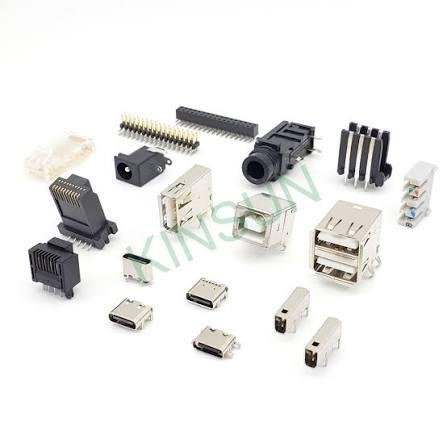
Navigating the Future of Digital Infrastructure: The Evolution of High-Density Processing Components
As global reliance on cloud computing, hyperscale data centers, and advanced artificial intelligence accelerates, modern enterprise IT infrastructure requires higher speed and seamless signal integrity. Traditional connectivity interfaces face severe bottlenecks as data rates exceed 112 Gbps per lane, forcing network architects to overhaul standard hardware designs. Within this high-stakes landscape, the IT Connector Market analysis reveals how hardware innovation is shifting toward co-packaged optics, ultra-low-loss copper interconnects, and compact high-density footprints. Enterprise servers, automated storage facilities, and high-performance computing clusters depend directly on these physical layer components to prevent latency and manage dynamic bandwidth demands across global networks.
Addressing physical hardware bottlenecks involves solving both complex signal degradation and rising thermal challenges in tightly packed rack systems. When bandwidth increases, conventional copper assemblies generate substantial heat and attenuation, compelling engineering teams to balance power budgets with physical spatial limits. Industry manufacturers are meeting this challenge by engineering hybrid connectors that integrate optical engines with application-specific integrated circuits. This strategy reduces internal power requirements while significantly extending operational lifespans across large-scale enterprise deployments. Consequently, organizational leaders must continuously evaluate physical layer upgrades alongside software optimization strategies to sustain digital operational efficiency.
What key architectural changes are driving modern data center connectivity?
Modern data centers are transitioning to high-density, co-packaged optics and ultra-low-loss copper solutions to overcome thermal management and signal attenuation challenges associated with data transfer speeds above 112 Gbps.
How do physical layer hardware choices impact overall enterprise network performance?
Physical layer components establish the baseline latency, thermal efficiency, and bandwidth capacity of an enterprise network, directly determining whether hardware can support high-throughput artificial intelligence workload processing without downtime.
➤➤➤Explore MRFR’s Related Ongoing Coverage In Semiconductor Industry:
Communication Analog Integrated Circuits Market
Compulsory Third Party Insurance Market
 Russian
 English
 Arabic
 French
 Spanish
 Portuguese
 Deutsch
 Turkish
 Dutch
 Italiano
 Romaian
 Portuguese (Brazil)
 Greek